



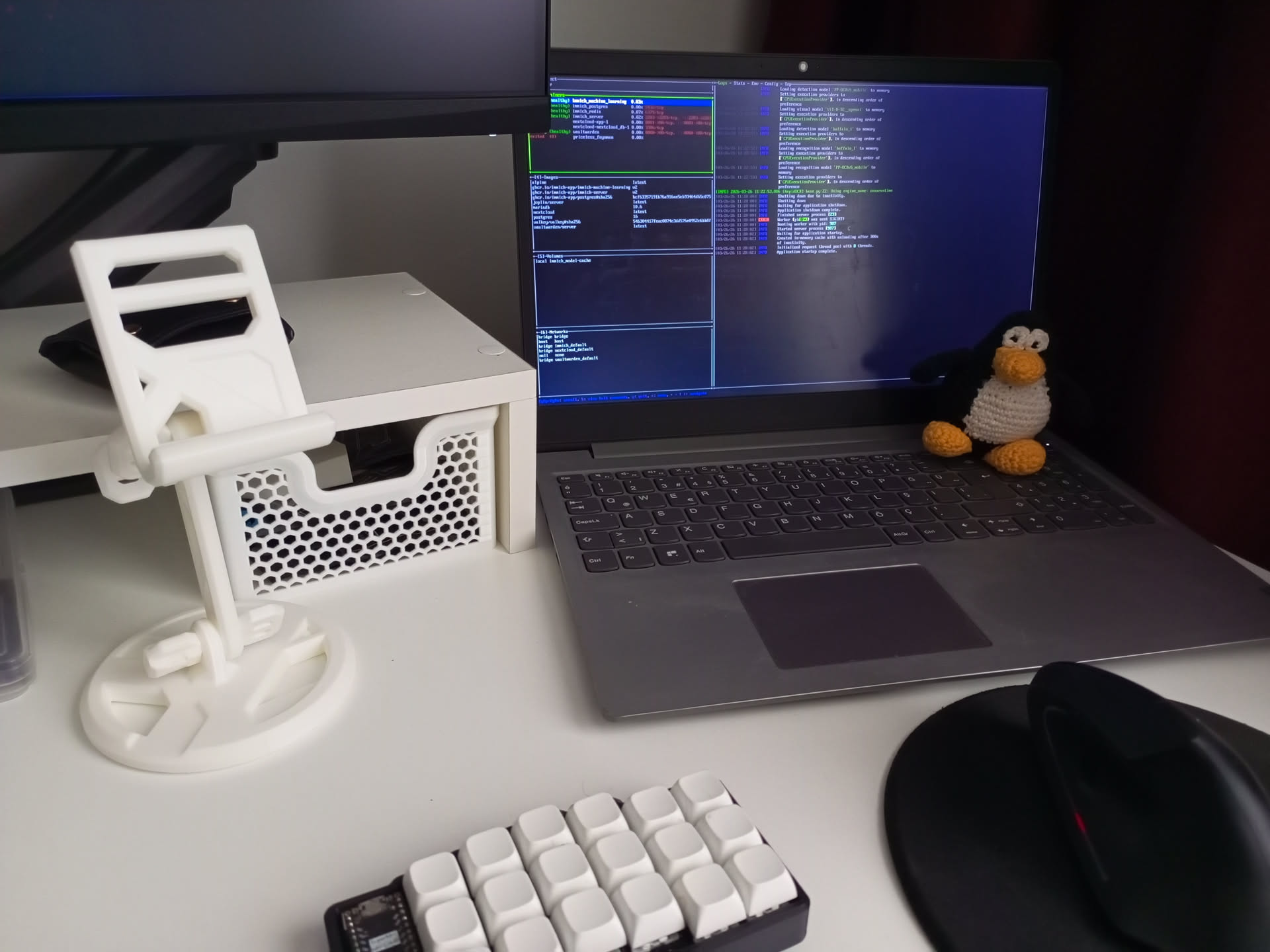
Having my own homelab was something I wanted to try for a long time. However, I just couldn’t get started. Mostly because I kept overthinking it. How will I handle dynamic IPs? Do I need something like a local DNS on my router for that? Even if I solve things inside the home, how am I supposed to access it remotely? Do I need port forwarding at the NAT layer? And what about TLS certificates, how do I even manage those without using a public certificate authority?
Posts Tagged: Highlights
Tailscale’d Into Homelabbing
One Year of Using Go
It has been about a year since I decided to learn Go, and more than half a year since I started working at an HFT company that uses it. This is not a very long time with the language, but some of my developer friends have already asked me about my impressions of Go. In this blog post, I want to share my overall experience with it. I will first explain why I felt the need to switch to Go in the first place. Then, I will describe what I did to learn it and how I improved over time. Finally, I will discuss my current impressions of Go, including what I like, what I do not like, and whether I would recommend it to others based on their goals.
Using The Corne Split Keyboard For Half A Year
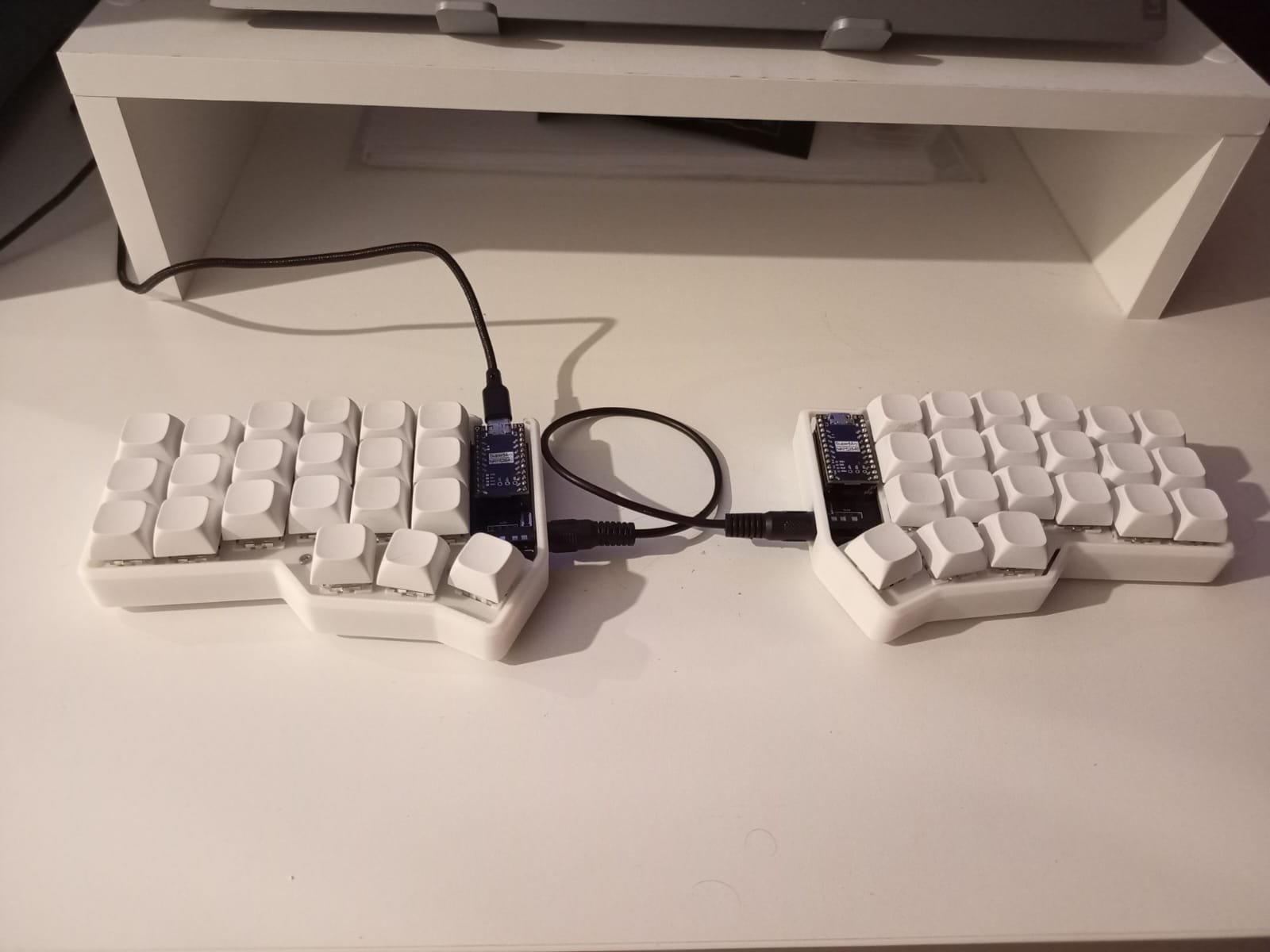
I built my own Corne keyboard around six months ago, in July. I have been using it ever since. Although I am no expert on split keyboards, I accumulated a fair amount of observations during this whole process. I thought that if I wrote down my experiences, they might still be of interest to people who are considering whether to try a split keyboard. Or, if they are already using one, maybe they can also benefit from some of the tricks that helped me a lot. So, here it is: a blog post about how and why I built my own Corne keyboard, the things I learned and applied to improve my ergonomics over the last 6 months.
Why I'm Leaving NixOS After a Year?
Around a year ago, I published a blog post explaining my overall experience Switching from Arch to NixOS. You can read it if you’re interested in my early experiences, but, to give you a spoiler, that post ends with me saying: Unfortunately, though, I don’t think the benefits I’ve gotten in this one month of using NixOS so far justified the cost I’ve initially spent and continue to spend learning Nix and NixOS. — Ultimately, whether the benefits of learning a particular technology outweigh the costs depends on how much you take full advantage of its features. So, I believe that if I experiment with more setups, try different programs, or start managing servers with Nix, I will begin to see a better return on this investment from what I have learned so far. :)

Linux Asceticism
Most well-known living philosophies -such as Cynicism, Epicureanism, Stoicism, Buddhism, and Sufism- advocate some form of Asceticism. This could involve various acts such as fasting, deliberately confronting personal fears, or even something as subtle as choosing not to pour salt on food. But regardless of the specific way that these practices are pursued, the main goal remains the same: Strengthening your body and mind to make yourself indifferent to and indifferent from the things that are outside your control. That is to say, turn yourself into someone who can handle hardships with as few possessions as possible.

Lessons from Plain Text
When you interact with a text file using an editor, what you see doesn’t necessarily reflect the data stored in the file. Sure, the contents of plain text files are byte codes encoded in formats like ASCII, UTF8, or UTF16, and these byte codes are the ultimate source of truth. But in the end, it’s still your text editor that chooses how to interpret and represent that ultimate source of truth - binary codes into something recognizable to you. This means that two different files could look the same, or the same file might appear differently depending on the editor(s) you use.
Understanding Concurrency, Parallelism and JS
Up until now, I was not aware that concurrency and parallelism were actually different things since they are often used interchangeably by some. I just learned that this is not the case while reading Chapter 9 of the book “Clojure for the Brave and True.” This made me want to learn more about concepts related to concurrency and parallelism, especially concerning the programming language I know best: JavaScript. So this essay is basically a collection of notes I made during this learning process.
Switching from Arch to NixOS
I’ve switched my desktop computer environment from Arch Linux to NixOS and used it for about a month. I want to share my migration experience in case it might interest or even help others. I also want to thank my friends Onur and Mert for encouraging me to switch to NixOS and providing help. Why Migrate from Arch in the first place? As someone who likes playing with tools to understand how they work as well as to match my preferences and ergonomic choices, I find myself frequently changing many configurations on my system. However, it didn’t take long for me to realize that I need a system to save and possibly automate these configuration processes to save time in the future.
Introducing: Mark Scroll Positions
ℹ️ Disclaimer This post was written when Mark Scroll Positions was first built. Since then, it has been modernized by a lot, and the application does not look as it’s been showcased in here. Still, the ideas here should remain useful for building an intuition about how it works. Try the extension in Chrome or in Firefox See the source code kugurerdem/mark-scroll-positions I like reading blog posts a lot. While some of them are short and easy to read, most of them are long and require more time to finish. When reading those long essays, I take a break most of the time. Thus, when I re-open an essay, I often lose the original place where I was reading. And if I can remember where I was, then I manually scroll back there. This makes the reading experience less smooth and more time-consuming.
Debloating My Android Phone with ADB
My mother recently mentioned that her phone is continually opening certain windows and prompting her to use services she doesn’t need. After checking her phone and doing some online research, I found out that many others have also complained about this issue. Apparently, she was referring to pop-ups triggered by a pre-built program called “SIM Menu”. This program basically allows operators to send notifications and even generate pop-ups on your phone. And the frustrating part is that most of these pop-ups seem to promote irrelevant services. If you accidentally click “OK” when one of these pop-ups appears, you get charged by your provider. It is a carefully set up trap designed to make you accidentally subscribe to their unnecessary services and pay money.
Understanding Keyboard Events Better
In this essay, I describe how I made a Node.js module to listen to keypresses across the system on Linux machines using X. This experience helped me grasp how the OS and Window Managers handle keyboard inputs, clarifying the reasons behind an unexpected behavior I had encountered before, which I also mention in the essay. If you’re interested in learning more about how keyboard events are handled, this essay might be of interest to you.
Reflections on My Journey into Software Development
This blog post is a review of my journey into software development up until 2023-09-22. It is not intended to be a series of detailed explanations/guidelines for my career choices. Consider it more like personal reflections on events that shaped me as a developer. So, take the things that I say here with a grain of salt. My First Introduction to Programming I used to hang out with my cousin a lot when I was around 6 or 7 years old. He would always develop something cool whenever I saw him using his computer.
On the Importance of Typing Fast
Typing Fast is Important It is often mentioned that the bottleneck in building software projects is not one’s typing ability but ability to think clearly, and to design the architecture effectively. Afterall, if typing speed was so essential to programming, the time difference between rewriting an already existing project with that of creating it from scratch would not be as high as it is. While I agree that typing speed is not essential to programming, I cannot relate on how this fact is used by lots of people to justify their thinking of typing fast being not important for the development process.