



I recently read Concurrency in Go by Katherine Cox-Buday. In the “Queuing” section, there was a discussion of how we can use Little’s Law to predict our pipeline’s throughput, given sufficient sampling. I honestly wondered why I had not come across this simple idea before, after finishing that part. As I understand it, it can potentially be used in almost any situation where a queue is involved. Not just message queues, even things like physical queues. So I thought I’d write an intuitive explanation to help it stick and share the idea.
Hi!
I write about software development, philosophy, and psychology, mostly through self-observations.
I highly value understanding fundamentals and rational thinking, and I try to incorporate these values into how I approach software. This effort also runs through much of my writing here.
Blog Posts
A Little Explanation of Little's Law
Before Making It Configurable
Configurations exist to allow a program to behave differently without modifying its code. You have a program, you configure it, run it, and it behaves accordingly. In a way, they are like function inputs, but at the application level. They tend to reflect and affect how a system works under the hood. This also makes them closely related to the complexity of our applications. Thinking this way, I cannot think of configurations as just simple inputs. That is why I wanted to think about this topic a bit more and write down some thoughts.
No, Even JavaScript Has Types
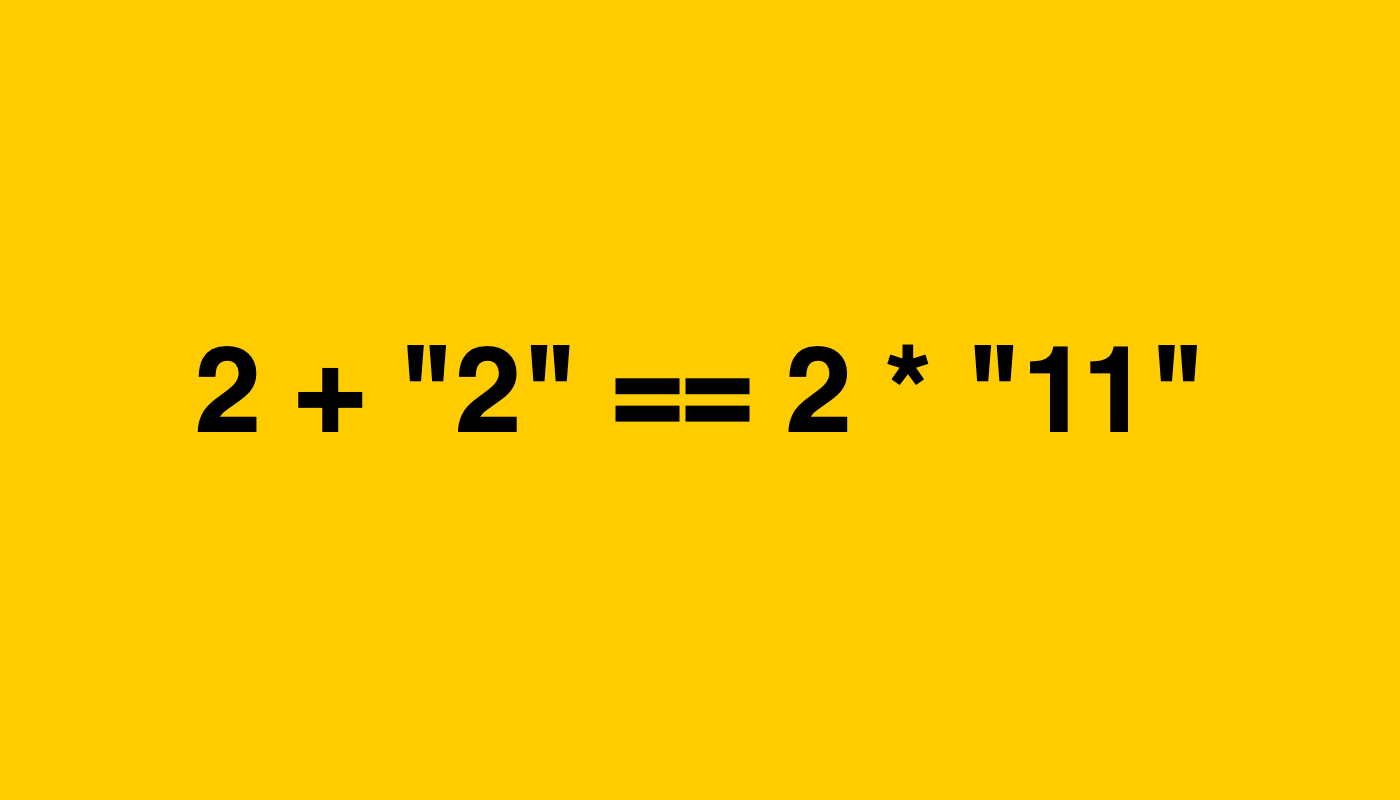
An example of an expression that returns true in JavaScript. Here, 2 + "2" becomes "22", and 2 * "11" becomes 22. In the end, "22" == 22 returns true. 🙂 I sometimes see people say that programming languages like JavaScript, PHP, and Perl do not have types. Well, that’s simply not true. Yes, these languages do not enforce types at compile time. They are also not very strict about what you can do with those types. But they still have type systems. Every value has a type during execution. I think that if we define a type as “a classification of a value that determines how it can be used and how it behaves in operations,” then we can also say that it has types. Which means almost all of the mainstream programming languages you have heard of are already typed! JavaScript already supports types like strings, lists, numbers, and so on.
Tailscale’d Into Homelabbing
Having my own homelab was something I wanted to try for a long time. However, I just couldn’t get started. Mostly because I kept overthinking it. How will I handle dynamic IPs? Do I need something like a local DNS on my router for that? Even if I solve things inside the home, how am I supposed to access it remotely? Do I need port forwarding at the NAT layer? And what about TLS certificates, how do I even manage those without using a public certificate authority?
LLMs Are Not Necessarily About Speed
Around 1.5 years ago, I developed a web extension called Mark Scroll Positions both to solve my own need and to experiment. If you are interested in how it looked and the original idea, you can check Introducing: Mark Scroll Positions. But long story short, even though I did not have high expectations for it, other people also started using it after I published it. I received some comments on both Firefox and Chrome. A few users even went to GitHub and opened issues.
Tailscale’d Into Homelabbing
Having my own homelab was something I wanted to try for a long time. However, I just couldn’t get started. Mostly because I kept overthinking it. How will I handle dynamic IPs? Do I need something like a local DNS on my router for that? Even if I solve things inside the home, how am I supposed to access it remotely? Do I need port forwarding at the NAT layer? And what about TLS certificates, how do I even manage those without using a public certificate authority?
One Year of Using Go
It has been about a year since I decided to learn Go, and more than half a year since I started working at an HFT company that uses it. This is not a very long time with the language, but some of my developer friends have already asked me about my impressions of Go. In this blog post, I want to share my overall experience with it. I will first explain why I felt the need to switch to Go in the first place. Then, I will describe what I did to learn it and how I improved over time. Finally, I will discuss my current impressions of Go, including what I like, what I do not like, and whether I would recommend it to others based on their goals.

Using The Corne Split Keyboard For Half A Year
I built my own Corne keyboard around six months ago, in July. I have been using it ever since. Although I am no expert on split keyboards, I accumulated a fair amount of observations during this whole process. I thought that if I wrote down my experiences, they might still be of interest to people who are considering whether to try a split keyboard. Or, if they are already using one, maybe they can also benefit from some of the tricks that helped me a lot. So, here it is: a blog post about how and why I built my own Corne keyboard, the things I learned and applied to improve my ergonomics over the last 6 months.

Why I'm Leaving NixOS After a Year?
Around a year ago, I published a blog post explaining my overall experience Switching from Arch to NixOS. You can read it if you’re interested in my early experiences, but, to give you a spoiler, that post ends with me saying: Unfortunately, though, I don’t think the benefits I’ve gotten in this one month of using NixOS so far justified the cost I’ve initially spent and continue to spend learning Nix and NixOS. — Ultimately, whether the benefits of learning a particular technology outweigh the costs depends on how much you take full advantage of its features. So, I believe that if I experiment with more setups, try different programs, or start managing servers with Nix, I will begin to see a better return on this investment from what I have learned so far. :)

Linux Asceticism
Most well-known living philosophies -such as Cynicism, Epicureanism, Stoicism, Buddhism, and Sufism- advocate some form of Asceticism. This could involve various acts such as fasting, deliberately confronting personal fears, or even something as subtle as choosing not to pour salt on food. But regardless of the specific way that these practices are pursued, the main goal remains the same: Strengthening your body and mind to make yourself indifferent to and indifferent from the things that are outside your control. That is to say, turn yourself into someone who can handle hardships with as few possessions as possible.